Blowing
Applied in tubes, ducts, trays, blocks, tunnels, collecting channels, with no risk of rodent attacks. Also applied for aerial installation between supports and buildings on external strength members or using the winding method.
Ducting
Applied in ducts, trays, blocks, tunnels, collecting channels, with a risk of rodent attacks.
Direct Buried
Applied in harsh environments with potential mechanical impact: in all ground types, swamps and harsh rivers.
Submarine
Applied in sea areas (coastal shelf and deep-sea), on navigable rivers, in lakes and water storage basins, in harsh environments, in bogs and unnavigable rivers.
Figure 8
Applied for aerial installations: on power lines, lamp posts, between buildings and constructions. Suitable for aerial installation on transmission equipment and power facilities in dielectric package.
Aerial
Applied for aerial installation on distribution and high voltage power lines, as well as railway catenary.
Indoor
Applied inside buildings (including vertical runs), in trays, channels, on outer sides of buildings, as well as in duct, in tubes and blocks. Suitable for blowing-in into protecting polyethylene tubes.
Drop
Applied for aerial installation on transmission towers, lamp posts, between buildings and constructions.
OPGW/Ground Wire
Applied in the construction of fiber-optic link on overhead transmission lines of 35 kV and more.
Fire Rated
Used for stationary installation when the optical fiber needs extra protection from mechanical damages.
Specialty Cable
For fiber optic monitoring systems.
Materials
17 April 2026
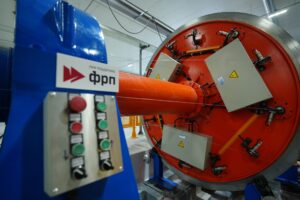
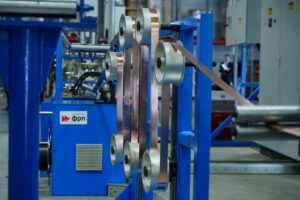
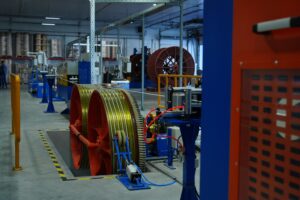
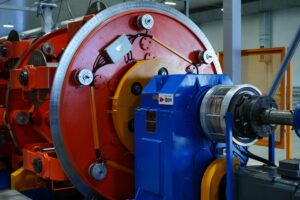
A production line for manufacturing optical cores for submarine fiber-optic cables has been launched at a site in Perm Krai. This is the first phase of the INCAB-Far East project — a full-cycle, interregional production facility. An official ceremony marking the launch of the line took place today with the participation of Dmitry Makhonin, Governor of Perm Krai.
The cable core — a semi-finished product — will be transported to the Far Eastern site of Incab in the urban-type settlement of Slavyanka (Primorsky Krai), where the finished submarine cable will be produced. The launch of the plant in Primorye is scheduled for the second quarter of 2026. Finished products will be shipped directly to cable-laying vessels, as the berth is located just 50 meters from the production building.
Once both sites reach full capacity, the group will be able to produce up to 2,500 km of submarine cable per year at average equipment utilization. The cable is designed for depths of up to 4,000 meters, with a service life of at least 25 years. The production of submarine cable is included in the Russian Federation’s Communications Industry Development Strategy through 2035.
Equipment supply for the project was financed through a preferential loan from the federal Industrial Development Fund.